







This guide explains how to decide what to address before listing. It is not repair, legal, or inspection advice, and it does not evaluate any specific property.

Start with maintenance, visible damage, and unresolved conditions rather than decorative upgrades. A West Valley Phoenix home does not need to be remodeled to sell, but it should read as clean, intact, and responsibly maintained. Prioritize what a buyer sees on a first walkthrough, what raises a question about a major system, and what makes the home look roughly lived in. Do not replace working items simply to make them newer. The right list depends on the property’s condition, the listings it will compete against, and the seller’s timeline, all of which should be verified for the specific address and listing date.
That describes how the decision gets made. It is not a prediction about price, offers, or how quickly anything sells.
If you are still weighing whether to sell now or wait, settle that first — this guide assumes the decision is made. Most West Valley Phoenix sellers then start in the wrong place. The instinct is to reach for what is visible and improvable — countertops, cabinet color, fixtures — because those feel like progress. Meanwhile the twelve-year-old water heater and the ten-year-old air conditioner that has never been serviced go untouched. That is backwards, and it is the most common preparation mistake we see.
The goal is not to renovate the home
“What is worth fixing” cannot be answered from a national return-on-investment table. Those charts describe averages across markets with nothing to do with your house, and they encourage the wrong question.
The better question is what condition will distract a buyer, raise an unanswered question about a major system, or cause the home to be read as one that has been let go. That is a positioning judgment, not a financial calculation, and it has to be made against the homes a West Valley Phoenix buyer will actually compare yours to.
Bold: Dated describes style. Damage describes condition. Sellers routinely spend money correcting the first while leaving the second in plain view.
Four ways to sort every condition
Every item on your list belongs in one of four categories. Sorting first is what keeps a preparation budget from being spent on whatever was easiest to notice.
Address now. Active problems and visible damage. Leaks, broken components, holes in walls, damaged doors, deteriorating surfaces. These are the items that take over a walkthrough.
Evaluate further. Something is observable but the cause is not established — staining, cracking that appears to be changing, a system behaving oddly. The next step is a qualified opinion, not a decision.
Document and disclose. Known items that need records rather than work — a serviced older system, a completed repair. Arizona’s seller disclosure guidance directs sellers to attach available invoices, warranties, inspection reports, and leases.
Leave alone. Functional items that are simply older or not to current taste.
One West Valley Phoenix wrinkle worth knowing: financed buyers bring property standards of their own, and near Luke Air Force Base VA financing is routine. VA minimum property requirements can turn a document item into an address-now item.
A single condition can move between categories as you learn more. An older air conditioner with service records is a document item. The same unit making an unfamiliar noise is an evaluate item.

Condition matters more than newness
For preparation decisions, condition should generally be assessed before optional upgrades.
A working ceiling fan that is not the current style is still a working ceiling fan — replacing it with a nicer one changes very little for a West Valley Phoenix buyer. We have watched sellers spend real money on exactly that while a water heater well past its typical service life sat in the garage.
What consistently matters more is whether a West Valley Phoenix home reads as cared for. Clean. Intact. No holes in the drywall, no damaged doors, nothing that suggests the house has been lived in roughly. That is not a renovation standard. It is a maintenance standard, and it is reachable for most sellers without a contractor.
One rule throughout: name the visible condition, not the assumed cause. A stain is a stain until someone qualified determines what produced it.
Conditions that come up in West Valley Phoenix homes
These are the items that recur here specifically. None of them is diagnosable from an article.
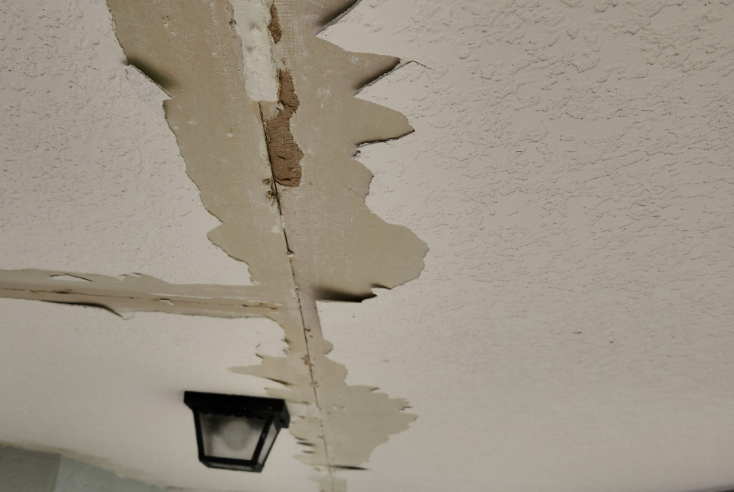
Peeling paint on patio and porch ceilings
Extremely common on West Valley Phoenix homes and worth attending to. It sits directly overhead in the outdoor space buyers walk through, it is unmistakably visible, and it reads as deferred maintenance.
One caution: if peeling suggests moisture or a substrate problem, repainting the surface without establishing the cause is the wrong move. That is cosmetic concealment of a condition that may need real attention, and it collides with disclosure obligations.
Stucco cracking
Common on West Valley Phoenix homes and not automatically significant. Fine surface cracking is different from wide, displaced, or changing cracks, and different again from cracking with evidence of moisture entry.
An article cannot tell you which one you have. Wider or changing cracks warrant a qualified evaluation before you decide whether this is an address-now item or a document item.
Air conditioning age and service history
In this climate the cooling system gets attention, and West Valley Phoenix sellers often jump straight from “it is ten years old” to “we need a new one.” Age alone does not establish that a system is failing.
Separate four things: how old it is, whether it works properly, whether it has been serviced and documented, and whether a symptom has been observed. A system with a maintenance record answers a question before it gets asked. One with no history leaves it open — a different problem from being old. Servicing and documenting is usually the proportionate step. Replacing on age alone rarely is.
Water heater and roof
Same logic. A water heater’s age is context, not a verdict — visible corrosion or leaking is the address-now condition. For roofs, known leaks and visible deterioration matter, and so does documentation of prior repairs or storm work. Age alone does not make a roof a problem.
Should you get a home inspection before listing?
There is no universal answer for West Valley Phoenix sellers, and anyone who gives you one is not describing your house. A pre-listing inspection changes when you receive information and how much time you have to act on it. Whether that helps depends on your property and your timeline.
Reasons a seller may commission one
It moves discovery off the contract clock for a West Valley Phoenix seller. You have room to get second opinions, obtain bids, bring in a specialist, complete work without a buyer waiting, and collect documentation.
It is more useful when your knowledge of the home is genuinely incomplete — an inherited property, a former rental, or one where maintenance was handled by someone else. It can also connect symptoms that looked unrelated, and redirect a budget from cosmetics toward things that matter.
Reasons a seller may decide against one
The buyer will almost certainly order their own inspection regardless, and two inspectors can observe different things, describe the same condition differently, or reach the property at different times. Yours does not replace theirs.
General reports are broad and technical. A seller reading one without professional context may treat every notation as a required repair, or overcorrect and fix far more than the situation calls for. The report also ages — condition is not static between your inspection and a buyer’s. And it is only useful if you have time to act on it. A long document received days before listing delivers information without delivering that ability.
The sequencing consideration
A written inspection report presents a home as a list of findings. A buyer reading that list before ever walking the property has no context for it — no sense of the home’s overall condition, scale, or strengths — and may form an impression, or decide not to make an offer at all, before seeing the place as a whole. The same findings reviewed after a walkthrough get weighed against everything else that buyer now knows. This is an observation about the order in which information arrives, not a reason to withhold anything: required disclosures still have to be made fully and on time, and a seller who has a report must handle it accordingly.
When a targeted evaluation makes more sense
This is the option most West Valley Phoenix sellers never consider. The choice is not only between a full inspection and nothing.
If your concern is already identified, the relevant specialist is usually the more direct step. An air conditioning contractor for a cooling question. A roofer for a roof concern. A plumber for a suspected leak. A pool professional for equipment. The appropriate structural professional for cracking that appears to be moving.
Four paths, not two: no additional evaluation, an agent walkthrough, a targeted specialist evaluation, or a full pre-listing inspection.
What disclosure requires either way
Every West Valley Phoenix seller must disclose known material facts about the property. That obligation exists whether or not an inspection was ever ordered, and the state’s seller disclosure guidance is unambiguous — when in doubt, disclose, and do not guess at answers you do not have. Sellers are not expected to discover unknown defects. They are expected to disclose what they know. Arizona REALTORS® seller disclosure guidance (external, new tab)
Questions about your specific obligations belong with the appropriate Arizona real estate or legal professional.
What an agent walkthrough can and cannot do
Walking a West Valley Phoenix home the way a buyer will encounter it is genuinely useful, and it is worth being precise about its limits.
An agent can identify what is immediately visible, what interrupts a buyer’s experience, what reads as damage versus ordinary age, which conditions look like they warrant a specialist, and how the property presents against competing listings.
An agent cannot establish that a system is safe or functioning, diagnose structural, mechanical, electrical, roofing, plumbing, or moisture conditions, replace a licensed inspection, or determine that a defect you cannot see does not exist. A walkthrough is a presentation and positioning judgment. It is not technical due diligence, and it should never be treated as a cheaper substitute for it. Inspection mechanics themselves are covered in how a home inspection differs from an appraisal.
Solar is a documentation question, not a repair
If your West Valley Phoenix home has solar, the work before listing is paperwork and verification rather than anything physical.
Gather the agreement and know which kind you have — owned, financed, or leased. Then gather the electricity history. A buyer will reasonably want to understand both the obligation and what the home has actually cost to run.
What needs attention before listing is any mismatch between the two. If bills have run higher than the system should produce, resolve that with the provider, servicer, or utility now rather than letting it surface mid-transaction. A solar payment alongside unexplained electric bills is a material cost question, and it is far easier to answer with records in hand.
What not to fix
None of these is a universal rule. Each is conditional on the property, and repair-related terms can still be negotiated later — see how sellers evaluate offer terms.
- Working ceiling fans, replaced only because a newer style exists
- Intact countertops, replaced only because another material is current
- Functional appliances swapped to match each other
- Cabinet painting undertaken with no larger condition rationale
- Highly personalized improvements reflecting your taste rather than the home’s condition
- Any project that cannot be finished properly in the time available
- Anything selected from a national renovation chart without looking at your actual house
A half-finished project is worse than an unstarted one, and a rushed repair can create a new problem. Work should address the underlying condition where known, be done competently, and be documented.
Before you add anything major
Once a sale is reasonably in view, West Valley Phoenix owners should be cautious about taking on a major improvement, a long-term contract, a financing obligation, or a significant project without first understanding how it will affect the transaction.
We have seen a West Valley Phoenix homeowner add solar after learning a move was likely. The new obligation and its transfer questions complicated the planned sale enough that the owner ended up on a different path. The point is not that solar is a problem — it is that a major commitment made shortly before selling can introduce consequences there is no longer time to work through. The same applies to financed equipment, additions, pools, and extensive remodeling.
Where to go from here
A pre-listing walkthrough can sort your West Valley Phoenix home into what to address, what to have evaluated, what to document, and what to leave alone, based on the actual property rather than a generic checklist. Once you understand prep, pricing a West Valley Phoenix home is next.
At CalzaCo we help sellers position their home strategically and actively guide through pricing, preparation, and negotiation. You can see how we work with sellers for more details.
Ready for a clear plan structured for your situation? click here or call/text 623-242-2900.

Frequently asked questions
What should I fix before selling my West Valley Phoenix home?
Address visible damage, active maintenance problems, and conditions that raise questions about a major system before spending anything on decorative upgrades. The home should read as clean and intact rather than newly remodeled. Build the list from your actual property and the listings it will compete against.
Is it worth fixing anything before selling?
That cannot be answered from a national return table, and any figure attached to a specific improvement is describing other houses. The useful version is whether each condition should be repaired, professionally evaluated, documented and disclosed, or left alone.
Do I need to replace an old air conditioner before selling in Arizona?
Not on age alone. Consider whether it works properly, whether a symptom has been observed, and whether service records exist. A qualified evaluation makes sense when condition is uncertain. Servicing and documenting is often the proportionate step for a West Valley Phoenix home rather than replacement.
Should I get a home inspection before listing my house?
There is no universal answer. It gives you time to act before contract deadlines, but the buyer will likely inspect anyway, reports are broad and technical, and it only helps if you have time to respond. Where a concern is already identified, a targeted specialist evaluation is often more direct.
Should I repair stucco cracks before selling my West Valley Phoenix home?
It depends on what kind. Fine surface cracking differs from wide, displaced, or changing cracks, and differs again from cracking with signs of moisture entry. Have anything that appears to be changing evaluated by a qualified professional before deciding whether it needs work or documentation.
What solar documents do I need before selling a West Valley Phoenix home?
Gather the agreement, confirm whether the system is owned, financed, or leased, and pull your electricity history. If bills look inconsistent with what the system should be producing, resolve that with the provider or utility before listing rather than leaving it as an open question during the transaction.
+ show Comments
- Hide Comments
add a comment