


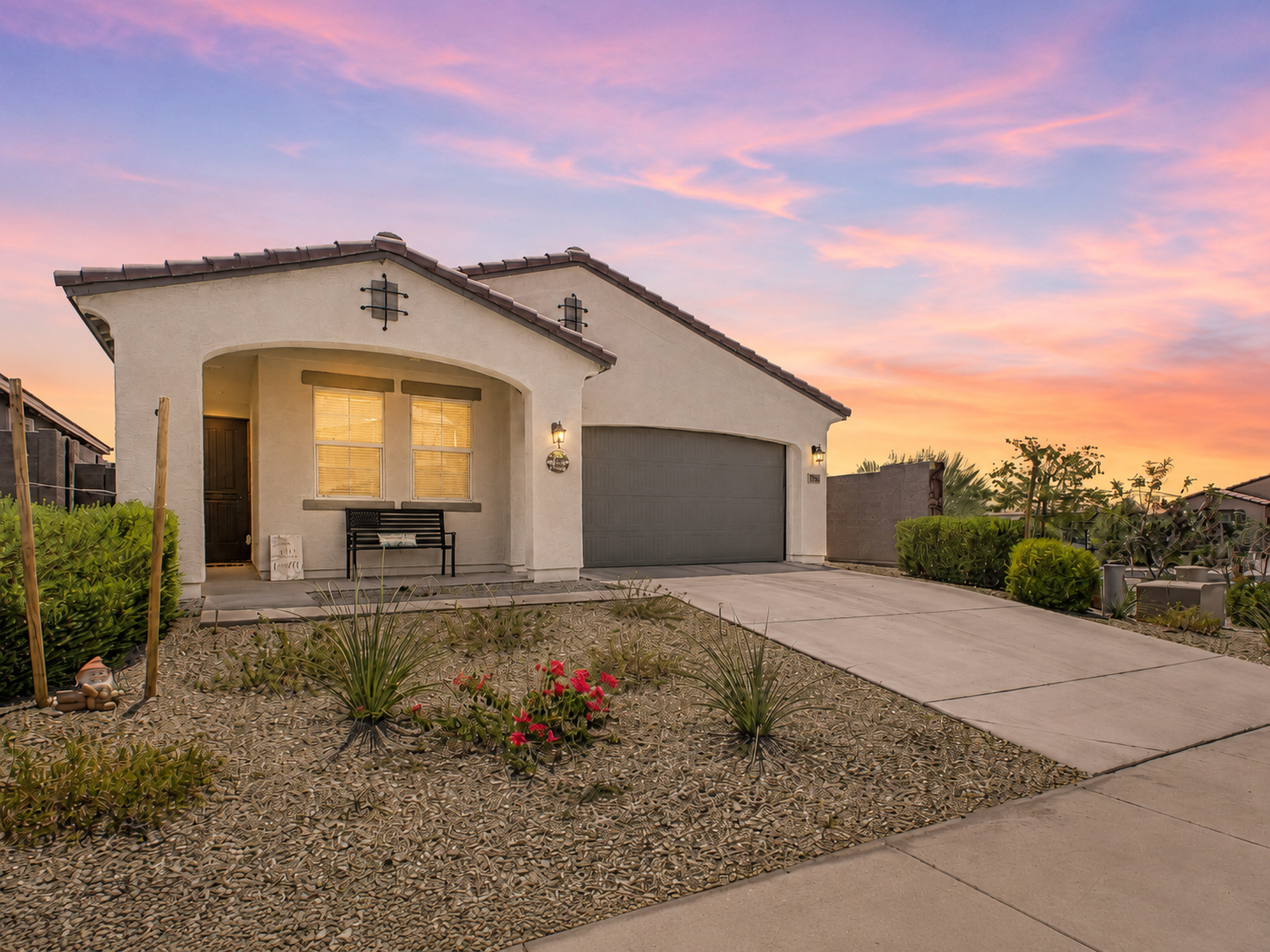




This guide explains how West Valley Phoenix sellers and agents evaluate a defensible listing-price range. It does not estimate the value of any individual home. If you are still deciding whether to sell now or wait, that is a separate question from how to price.
A West Valley Phoenix home should not be priced from a citywide average, an automated estimate, or a single price-per-square-foot calculation. A defensible listing price comes from six inputs considered together: the closest comparable closed sales, the homes buyers can choose instead right now, builder competition where it applies, the property’s condition relative to that competition, the price ranges buyers are actually searching, and the seller’s own flexibility on terms and timing. The final number should be verified against live data for the specific address, subdivision, property type, price segment, and intended listing date.
That is general guidance about how the decision gets made, not a valuation of any particular home.
Most pricing advice stops at “look at your comps.” That is the starting point, not the method. The harder question for West Valley Phoenix sellers is what to do when the evidence disagrees with itself, which is most of the time.
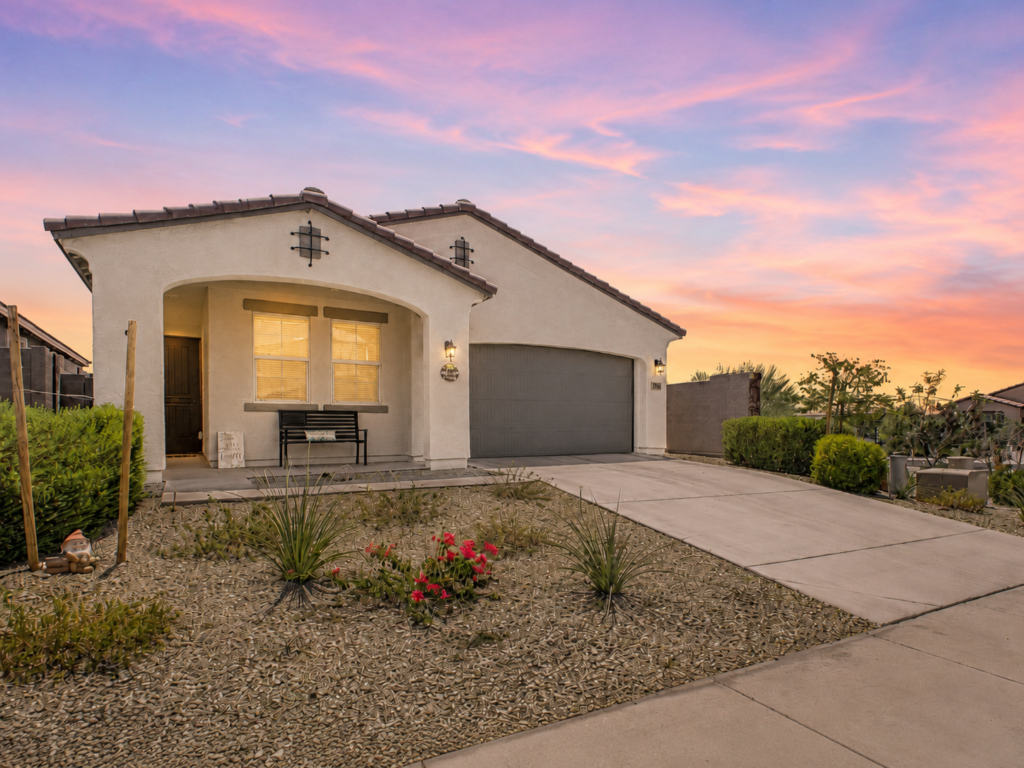
The six inputs behind a defensible listing price
Every serious West Valley Phoenix pricing conversation moves through the same six inputs. They are not a formula, and they are not weighted identically for every property.
- Closed comparable sales. What buyers have already paid for genuinely similar homes.
- Current competing listings. What a buyer can purchase instead of yours today.
- Builder competition, where it applies. Across much of the West Valley Phoenix area, a resale home competes with new construction, and that competition follows different rules.
- Property position. How the home compares at the moment a buyer encounters it, not on paper.
- Price-band placement. Which buyer searches include the home and which exclude it.
- Seller flexibility and a review plan. What trade-offs are acceptable, and what triggers a reassessment. If your sale needs to coordinate with a purchase, how to sequence buying before selling is its own decision. The same is true if you are weighing whether to rent or sell during a PCS.
The rest of this guide works through the inputs where sellers most often get pulled off course.
Why the closest sale is often not the strongest comparable
Distance is the easiest thing to measure, so it gets more weight than it deserves. Proximity is a filter, not a qualification.
Same street, different home
A one-story and a two-story are not comparable simply because they sit near each other. They offer different daily living, different layouts, and different use of the same square footage. Buyers rarely treat them as substitutes, so pricing one from the other imports a difference the numbers cannot absorb.
The working definition is behavioral rather than geographic: a sale is useful as a comp when a likely buyer would have realistically considered both homes. That test excludes plenty of sales on the same street and includes some further away.
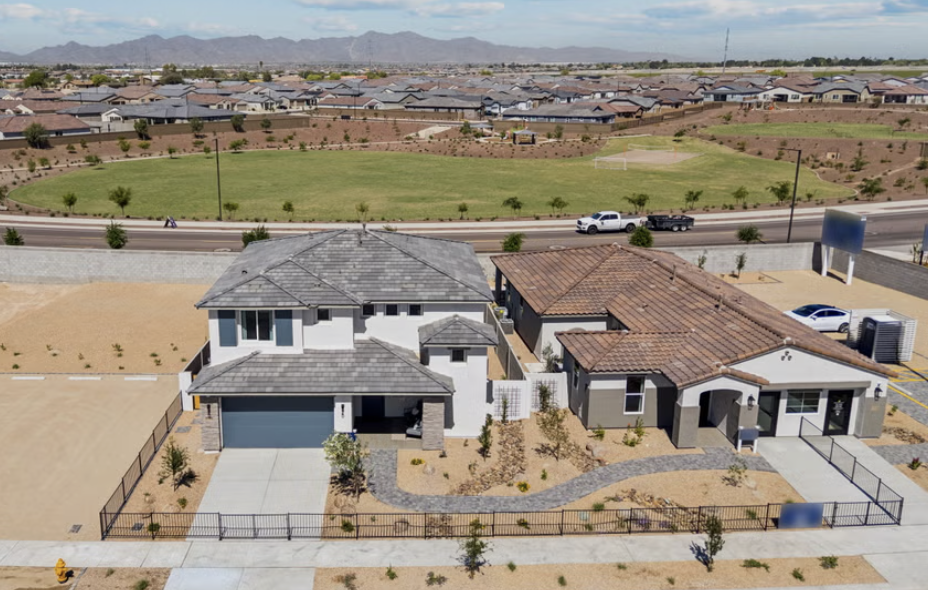
Same floor plan, different home
This is the one that surprises West Valley Phoenix sellers most. Exact floor-plan matches are common here, because the same house was built repeatedly across a community. An identical plan that sold three streets over looks like the perfect comparable.
Often it is not.
Two homes can share a floor plan and still be different products. One has a finished backyard, a pool, and upgrades throughout. The other has a builder-grade interior and a bare yard. The upgraded home generally sells for more, and that is the problem: the second seller cannot claim that number.
To use the upgraded sale, you adjust downward for the pool, the landscaping, and the finishes. Every adjustment is a judgment call, and every judgment call is a number a buyer, a buyer’s agent, or an appraiser can dispute. A price built on four downward adjustments has four places to be argued with.
A less identical home in the same square-footage range that actually sold near the recommended price supports that price on its own. Nobody has to accept your adjustment math for it to hold.
The most defensible comparable is usually the one that requires the least explaining. An exact floor-plan match carrying heavy upgrades can be worth less to a pricing conversation than a reasonably similar home that closed where you need it to.
When a recent sale outside the neighborhood beats an older sale inside it
Standard advice says stay inside the subdivision and stay recent. In slower or more balanced conditions those rules conflict, particularly in smaller neighborhoods, specialty communities, and West Valley Phoenix areas where homes sit on larger or more spread-out lots.
Sometimes there is simply no qualifying sale inside the neighborhood within six months.
The seller then faces a real choice: reach further back in time to stay inside the boundary, or cross into a comparable nearby neighborhood for something recent. Often the recent sale in a different neighborhood is better evidence. An older sale reflects conditions that may no longer describe what buyers are doing, and stale evidence inside the lines is not stronger than current evidence just outside them.
Which way that call goes depends on how similar the neighborhoods genuinely are and how much has changed since.
What each type of evidence can and cannot prove
West Valley Phoenix sellers are often handed a stack of data without being told what each piece is capable of proving.
Two things follow. Closed sales are backward-looking; they describe agreements that already happened. Active listings are the shelf your West Valley Phoenix home is joining, and a pricing conversation that only reviews solds is reading history without looking at the competition.
And price per square foot is a comparison aid, not a valuation method. It flattens lot size, garage configuration, condition, layout quality, community fees, and outdoor usability into one number. It is useful comparing closely similar homes inside a narrow segment, and misleading almost everywhere else.
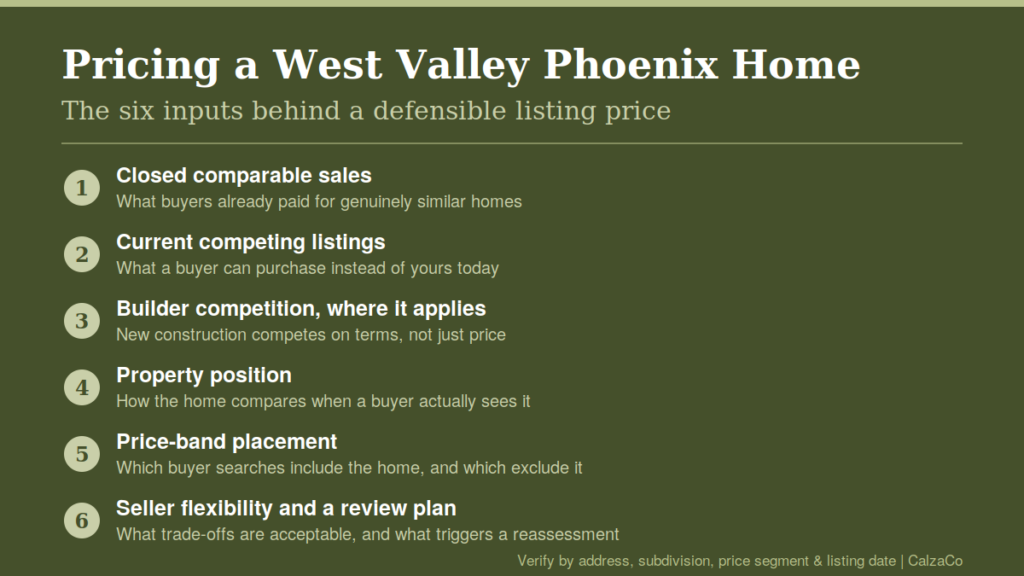
How builder competition changes West Valley Phoenix pricing
This factor is missing from national pricing advice, and it matters across much of the West Valley Phoenix area. Buckeye carries a large concentration of active new-build communities, with significant pockets throughout Surprise, south Goodyear, Litchfield Park, and Waddell.
When a builder is still selling near your subdivision, you are not only competing with other resale sellers.
A builder controls the entire transaction, which produces tools a private seller does not have. Many operate in-house lending, letting them offer financing incentives, including buying down a buyer’s interest rate, that no individual seller can replicate. They can absorb upgrades into the purchase price because they control construction, and they carry standing inventory they are motivated to move.
The consequence for a West Valley Phoenix resale seller is worth stating plainly. You may own a home with the same finishes, the same plan, and the same community as builder inventory, and still be unable to compete on the terms attached to it. A monthly payment shaped by a bought-down rate is not something a resale seller matches by adjusting a list price.
That produces no automatic price adjustment, and any content claiming otherwise is guessing. It means builder competition belongs inside the competitive analysis rather than beside it. Before positioning a resale listing in these areas, verify what is actually available: inventory homes, current financing incentives, which upgrades are included versus optional, lot premiums, completion timing, and what a buyer would still spend after closing on landscaping, window coverings, and finishing work. That last category is frequently where a move-in-ready resale home holds a real advantage.
Incentive structures change often and vary by community. Check them at the time you list.
That is frequently where a move-in-ready resale home holds a real advantage, and it is the same tradeoff buyers weigh in buying new construction versus resale.
Why a list price is a range decision, not a single number
Three different numbers get collapsed into one in most seller conversations. Separating them clarifies almost everything else.
The probable range is where the available evidence clusters. It is a range because the evidence is never unanimous.
The chosen list price is a positioning decision inside that range, reflecting where the home sits relative to its actual competition.
Acceptable offer terms are a separate decision involving concessions, financing type, appraisal exposure, inspection posture, closing timing, and possession. The highest headline number is not automatically the strongest overall position.
Keeping these separate is what lets a West Valley Phoenix seller hold a price with confidence, or move on terms, without feeling the strategy collapsed.
How price bands decide who sees your home
Buyers and their agents search within minimum and maximum price filters, so list price does not just signal value. It determines the comparison set. That is worth understanding from the buyer’s side, because how buyers search for homes online determines which listings they ever open.
The same West Valley Phoenix home can land near the top of one buyer’s search, near the bottom of another’s, or just outside a common ceiling and be excluded from both. A home just above a widely used threshold may be shown alongside better-finished homes in the range above while disappearing from searches that stop below it. Moving under the threshold widens visibility and changes the negotiating starting point.
Neither choice is automatically correct. There is no universal magic number. Relevant thresholds depend on price segment, property type, and what inventory currently sits on either side of the line, all verified against live search behavior for the specific home.
What overpricing changes before any price reduction
Overpricing is usually discussed in terms of what a seller eventually loses. That framing requires knowing what would have happened otherwise, which nobody can prove for one property. The useful question for a West Valley Phoenix seller is what changes immediately.
The comparison set shifts. The home is shown next to properties with stronger condition, better lots, or more functional layouts. It is judged against a group it was not built to win.
Some buyers never see it. A price above a common search ceiling removes the home from searches that would otherwise have included it.
Useful information stops arriving. With fewer qualified buyers engaging, the seller loses the feedback that separates a price problem from a condition, presentation, or competition problem.
The negotiating position changes. Longer exposure and a visible price history give later buyers a different frame for their offers.
None of that predicts an outcome. It describes what narrows, and the extent depends on the segment.
The initial market-response period
West Valley Phoenix sellers are often told the first two weeks determine the sale. That phrasing is common but too absolute to rely on. The accurate concept is the initial market-response period, and its length varies by price segment, property type, listing day, season, competition, and normal marketing time in that specific area.
What is consistent is that a new listing gets different attention than one buyers have already passed over. Buyers with saved searches see it shortly after activation, and that early attention does not return in the same form.
Read the early signals carefully. Showing volume, saves, inquiries, and agent feedback are not equally reliable, and a slow start does not prove the price is wrong. Photography, condition, access, competition, and marketing reach have to be ruled out first.
Set the review point before launch, based on normal exposure time for that segment, and agree in advance on what would justify a change.

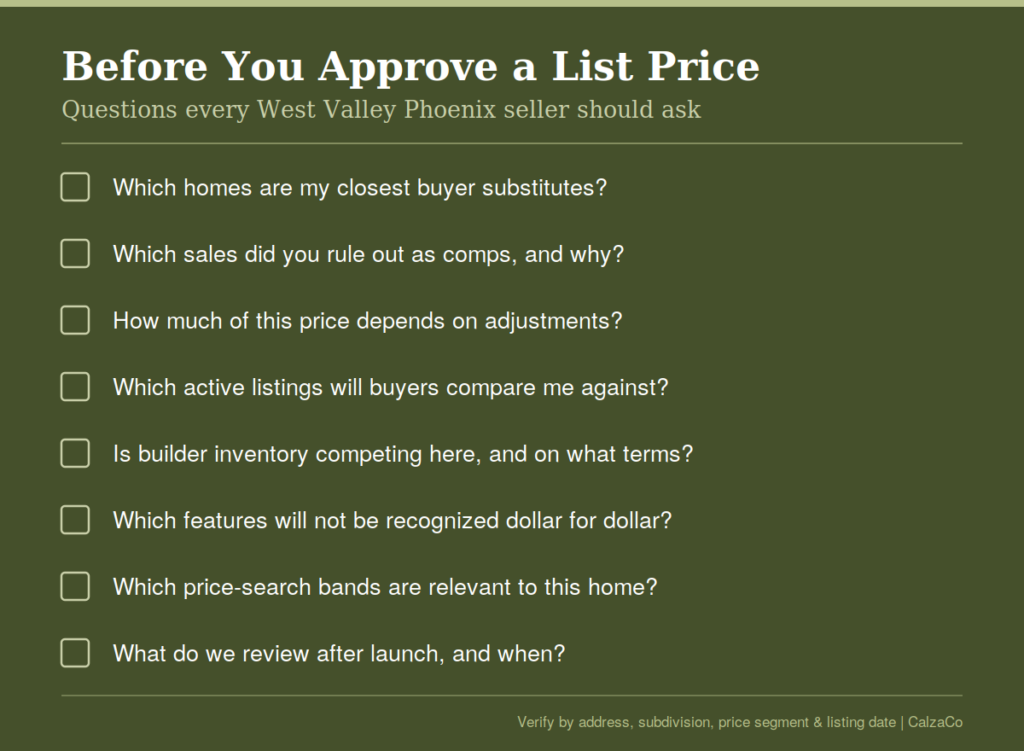
What to ask before you approve a list price
A recommended price should come with reasoning you can follow. These questions work whether you are interviewing agents or reviewing a recommendation you already have.
- Which three to five properties are the closest buyer substitutes to my home, and why those?
- Which sales did you rule out as comps, and what disqualified them?
- How much of this price depends on adjusting up or down from a comp, and which adjustments carry the most uncertainty?
- Which active listings will buyers compare against my home right now?
- Is there builder inventory competing in this area, and what incentives are attached to it?
- Which features here are unlikely to be recognized dollar for dollar, and why?
- Which price-search bands are relevant, and where does this price fall against them?
- What will we review after launch, at what point, and who decides whether to act?
If two agents give you different numbers, these questions usually explain the gap. They select different comparison sets, weigh active competition against closed sales differently, read condition differently, and take different positions on where inside a probable range a West Valley Phoenix home belongs. A number without reasoning is hard to defend later, and the highest number is not the best-supported one.
Why this framework still needs live data
Understanding these inputs is genuinely useful. It is what lets a seller evaluate a recommendation instead of accepting or rejecting it on instinct. Pricing is one piece of a larger process. If you want to see the whole of it, start with how we work with sellers.
It is not the same as being able to produce a price. Four of the six inputs are not publicly available: active and pending competition with actual contract terms, expired and withdrawn listing history, current builder incentive structures, and the comparison-set judgment determining which sales even qualify. Each requires live data and current market participation. A West Valley Phoenix homeowner working from public listing sites is seeing a partial and delayed picture.
That is not a reason to skip the framework. It is why the framework matters. A West Valley Phoenix seller who understands these six inputs can tell the difference between a price supported by evidence and a price presented as a conclusion, the more valuable skill, because it applies to every recommendation they receive.
Any pricing recommendation should be rechecked against live data for the address, subdivision, property type, price segment, and intended listing date before the home goes on the market.
A comparative market analysis prepared by a licensed agent is not an appraisal, and neither controls what an appraiser later concludes. If your buyer is financing, the appraisal is a separate step with its own standards. If your buyer is financing, the appraisal is a separate step with its own standards, and how VA appraisals actually work differs from what many sellers expect.
Where to go from here
Pricing is one piece of a larger process. If you want to see the whole of it, check out how we work with sellers.
A property-specific pricing review can identify the closest buyer substitutes for your West Valley Phoenix home, the active listings it will compete against, any builder inventory nearby and the incentives attached to it, and the price bands that determine who sees it. We are happy to help you price your home right for this market.
Book a strategy session and we will help you build a clear plan, click here to learn more or call/text 623-242-2900.
You can get more information from Arizona Department of Real Estate.
Frequently asked questions
How do I know what price to list my West Valley Phoenix home for?
A defensible list price comes from the closest buyer substitutes that recently sold, the homes buyers can choose instead today, builder competition where it applies, condition relative to that competition, and the price bands buyers search. Verify it against live data for your address and segment.
Why did two real estate agents give me different list prices?
Because they selected different comparison sets, weighed active competition against closed sales differently, or read condition differently. And sometimes a number is set to win the listing rather than to reflect the data. Ask each which properties they used, which they ruled out, and how much of the price depends on adjustments. The best-supported number matters more than the highest.
Is the same floor plan always the best comparable?
Not always. In West Valley Phoenix subdivisions an identical plan carrying a pool, finished landscaping, and heavy upgrades usually sold higher, so using it means adjusting downward, and every adjustment is a number someone can dispute. A reasonably similar home in the same square-footage range that closed near your price often supports it more confidently.
Should I list higher so I have room to negotiate?
Not automatically. The negotiating room a higher price seems to create is largely theoretical. It places your West Valley Phoenix home against better-finished competition or outside some buyers’ search limits, and buyers who never see the listing cannot negotiate on it. The decision should come from live alternatives, relevant price bands, and your own flexibility, not a fixed markup over an estimate.
How do builder incentives affect my West Valley Phoenix resale home?
Builders with in-house lending can offer financing incentives, including rate buydowns, that a private seller cannot match, and can absorb upgrades into price. That produces no automatic price adjustment, but builder inventory belongs in your competitive analysis. Verify current incentives before positioning your listing.
Does price per square foot determine what my home is worth?
No. Price per square foot is a comparison aid that flattens lot size, condition, layout, garage utility, outdoor space, and community fees into one figure. It is useful comparing genuinely similar West Valley Phoenix homes within a narrow segment and misleading across different property types or conditions.
+ show Comments
- Hide Comments
add a comment