








What Are VA Loan Closing Costs in Arizona?
If you are buying a home in Arizona with a VA loan, you are not just trying to find out what closing costs are. You are trying to understand which costs you actually pay, which costs the seller can cover, which costs are not allowed under VA rules, and how the structure of the offer affects the cash you bring to the table.
That last part is where most buyers get surprised. The same purchase price can produce two very different out-of-pocket numbers depending on how the offer is written.
This guide breaks down VA loan closing costs in Arizona in plain English, with real ranges, what is negotiable, and how a strong offer can shift the math in your favor.
VA loan closing costs in Arizona typically run 2% to 4% of the purchase price, not counting the VA funding fee, which is usually financed into the loan and not paid at closing. Sellers can pay all of a VA buyer’s standard closing costs and up to 4% of the loan amount in concessions, which is one of the strongest negotiation levers a VA buyer has. The total cash you bring to the table depends less on the price of the house and more on how the offer is structured.
Whether you are PCSing to Luke AFB, relocating for civilian work, retiring out of service, or making your next move in the West Valley, the principles below apply.
Who is this article for?
This article is for VA-eligible buyers planning a purchase in Arizona — active duty, veterans, Guard, Reserve, surviving spouses, and military spouses using their service member’s entitlement. Most of the local context references the Phoenix West Valley and Luke AFB because that is where we work every week, but the VA cost rules are the same statewide.
If you are early in your planning, our VA Home Loan Strategy Guide is a more in depth starting point. This article goes deeper on the costs themselves.
What costs make up VA loan closing costs in Arizona?
VA loan closing costs in Arizona generally fall into four buckets. The total of these buckets is what people mean when they say “closing costs.”
1. Lender fees. The origination charge, underwriting fee, processing fee, and any discount points you choose to buy. The VA caps lender origination at 1% of the loan amount, which protects VA buyers from inflated lender fees that show up on conventional loans.
2. Third-party services. Appraisal, credit report, title search, title insurance, recording fees, and the survey if one is required. The VA appraisal in Arizona usually runs in the $600 band. Title and escrow fees in Arizona are negotiable between buyer and seller and vary by company.
3. Prepaids and escrow setup. Homeowner’s insurance for the first year, property tax reserves, daily interest from closing day to month-end, and the initial deposit into your escrow account. These are not really “fees” in the traditional sense. They are money you owe anyway, collected upfront and held by your lender.
4. HOA and transfer fees. In Arizona, HOA transfer fees, capital contribution fees, and disclosure fees show up in most West Valley communities. Some are paid by the buyer by default. Others can be negotiated.
Prepaids vs. fees: Prepaids are money you would owe anyway — taxes, insurance, interest — collected at closing. Fees are services you are paying for at the closing table. Both show up on your Closing Disclosure under “Closing Costs,” but only fees are truly negotiable. Prepaids are math.
The total of these four buckets typically runs 2% to 4% of the purchase price for VA buyers in Arizona, before any seller concessions are applied.
Is the VA funding fee a closing cost?
No. The VA funding fee is a one-time fee charged by the Department of Veterans Affairs, and the vast majority of buyers finance it into the loan balance rather than paying it at closing. It is not a closing cost in the traditional sense. It is part of the loan.
For most first-time use VA buyers with no down payment, the funding fee is 2.15% of the loan amount. Subsequent use is 3.3%. Buyers with a service-connected disability rating of 10% or higher are exempt from the funding fee entirely, and so are surviving spouses receiving DIC.
Because the funding fee gets rolled into the loan, it affects your monthly payment, not your cash to close. The official VA breakdown of funding fee rates and exemptions is published on the VA funding fee page .
For this article, the important point is simple. When you see VA loan closing costs in Arizona quoted as 2% to 4% of purchase price, the funding fee is not part of that number.
How much are VA loan closing costs in Arizona on a real purchase?
The honest answer is that it depends on the price, the lender, the title company, and how the offer is structured. The ranges below are typical for a West Valley resale or new construction purchase in the $350K to $550K window. Treat these as planning numbers, not promises.
| Purchase Price | Typical Closing Costs (2%–4%) | Notes |
|---|---|---|
| $350,000 | $7,000 – $14,000 | Funding fee financed separately |
| $425,000 | $8,500 – $17,000 | Most West Valley resale and new construction lands here |
| $500,000 | $10,000 – $20,000 | More expensive HOA setup in some master-planned communities |
| $550,000 | $11,000 – $20,000 | Higher tax escrow if recently reassessed |
These ranges include lender fees, third-party services, prepaids, escrow setup, and standard HOA transfer fees. They do not include the VA funding fee, which is typically financed into the loan, and they do not include any seller concessions that reduce what you actually pay.
The biggest variable is not the price of the house. It is whether the offer is structured to shift costs to the seller.
What costs can the seller pay on a VA loan in Arizona?
This is where VA buyers have a real advantage that gets underused.
The seller can pay 100% of a VA buyer’s standard closing costs, plus up to 4% of the loan amount in additional seller concessions. Concessions are separate from standard closing cost contributions and can be used for things a buyer would otherwise have to pay out of pocket, including the VA funding fee, prepaid taxes and insurance, discount points to buy down the rate, and even certain debt payoffs.
On a $425,000 purchase, 4% concessions is $17,000 of additional negotiated room beyond standard closing costs. In today’s West Valley market we are negotiating seller-paid closing costs on VA purchases the majority of the time, particularly on new construction and on resale homes that have been sitting longer than the area average.
What sellers cannot pay under VA rules:
- More than 4% of the loan amount in seller concessions (standard closing cost contributions are separate)
- “Non-allowable” fees the buyer is forbidden from paying — these have to come off the table entirely, not shift to the buyer
A VA-savvy agent and lender will catch these before they hit your Closing Disclosure. This is one of the quieter ways the right representation pays for itself on a VA purchase.
What is a “non-allowable” VA closing cost?
Non-allowable fee: A closing cost the VA does not permit the buyer to pay. The fee has to be paid by the seller, the lender, the agent, or removed from the transaction entirely. It cannot be shifted to the buyer in disguise.
The most common non-allowables in Arizona transactions:
- Lender’s attorney fees (when separate from the origination charge)
- Escrow or settlement fees in some structures, depending on local custom
- Document preparation fees beyond what the 1% origination covers
- Tax service fees
- Postage or courier fees not tied to a specific service
- Notary fees when bundled into “processing”
Most of these are small individually. Together, they can add up to several hundred dollars that the wrong closing process quietly passes to the buyer. It is rarely about catching one huge fee. It is about catching the small ones consistently.
How can VA buyers reduce closing costs in Arizona?
There are four real levers. They are not all available on every transaction, and stacking too many can weaken the offer in a competitive situation. The decision is which lever does the most for your actual goals.
1. Negotiate seller concessions. The strongest lever. On a $425,000 purchase, 4% in concessions is $17,000 the seller can apply to closing costs, prepaids, and a rate buy-down. Whether the seller will agree depends on the market, the listing, and how the rest of the offer is structured.
2. Negotiate seller-paid standard closing costs separately. Standard closing costs are not capped by the 4% concession limit. A buyer can ask the seller to cover both — for example, all standard closing costs plus 4% in concessions toward a rate buy-down.
3. Use builder incentives on new construction. Most West Valley builders publish closing cost credits and rate buy-down packages tied to their preferred lender. These are real money. They are also designed to make the builder’s lender look like the only option, which is rarely true. Compare the total cost, not just the incentive.
4. Choose a lender competitively. Lender fees vary. The VA caps origination at 1%, but underwriting, processing, and discount points all vary by lender. A second quote almost always pays for itself in time spent.
What we generally do not recommend leaning on:
- Adding closing costs to the loan amount when the appraisal does not support it
- Choosing a higher rate to get a “lender credit” without running the breakeven math
- Taking a builder incentive without comparing the builder’s lender against at least one outside lender
What are the biggest mistakes VA buyers make on closing costs in Arizona?
The biggest mistake is treating closing costs as a fixed number. Buyers see “2% to 4% of purchase price” and budget for it as if it cannot move. In a market where seller concessions are common on VA purchases, that is leaving money on the table.
The second biggest mistake is letting the builder’s lender or the listing agent’s preferred lender quote the closing costs without a comparison. We have seen identical loan amounts produce closing cost estimates several thousand dollars apart between lenders, on the same property, in the same week.
The third is confusing the funding fee with closing costs. Buyers see “2.15% funding fee” added to the cost of the loan and think they need to bring that money to closing. They do not. The funding fee is financed.
The fourth is signing the Loan Estimate without reading the line items. Non-allowable fees often hide in plain sight under generic labels like “processing” or “administrative.”
How this looks in practice
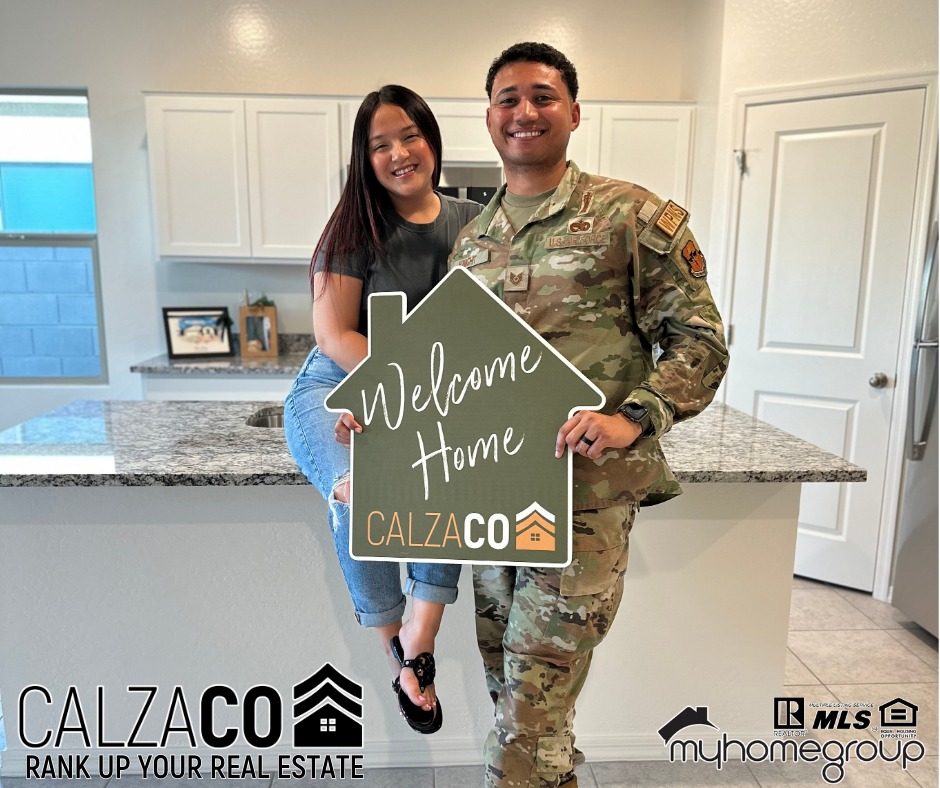
A recent CalzaCo military buyer — we will call him Anthony — purchased a new construction home in the West Valley using a VA loan. The purchase price was negotiated $10,000 below asking. The seller agreed to 4% in concessions, which was enough to cover all of his standard closing costs and fund a rate buy-down that lowered his monthly payment for the life of the loan.
Anthony’s total cash to close was a small fraction of what he had originally budgeted. The funding fee was financed into the loan. The concessions covered his prepaids and his lender fees. The builder’s repair list was negotiated separately after inspection, which protected the deal without using up concession room.
The structure was not magic. It was a planned offer written by an agent who had run the math before the offer was submitted, with a lender who knew which lines were negotiable. That is what good VA representation looks like in a market where sellers are willing to deal but the offer has to be written to capture it.
Frequently Asked Questions (FAQ)
What are the closing costs for a VA loan in Arizona?
VA loan closing costs in Arizona typically run 2% to 4% of the purchase price, before any seller concessions are applied. That includes lender fees, third-party services, prepaids, escrow setup, and HOA transfer fees. The VA funding fee is separate and is usually financed into the loan rather than paid at closing.
Is the VA funding fee considered a closing cost?
No. The VA funding fee is a one-time fee charged by the Department of Veterans Affairs and is typically financed into the loan balance, not paid at the closing table. It affects your monthly payment, not your cash to close. Buyers with a service-connected disability rating of 10% or higher are exempt from the funding fee.
Can the seller pay all of a VA buyer’s closing costs in Arizona?
Yes. Under VA rules, the seller can pay 100% of a VA buyer’s standard closing costs and contribute up to 4% of the loan amount in additional seller concessions. Concessions can cover prepaids, the funding fee, discount points for a rate buy-down, and certain debt payoffs. Whether the seller agrees depends on the market and the offer.
What is a non-allowable closing cost on a VA loan?
A non-allowable fee is a closing cost the VA does not permit the buyer to pay. The fee has to be paid by the seller, the lender, or the agent, or removed from the transaction entirely. Common non-allowables include lender attorney fees, tax service fees, and document preparation charges beyond the VA’s 1% origination cap.
How can VA buyers reduce closing costs in Arizona?
The strongest lever is negotiating seller concessions, which can cover standard closing costs and fund a rate buy-down. Comparing lenders, evaluating builder incentives against an outside quote, and asking the seller to cover specific line items are the other effective approaches. In today’s West Valley market, seller-paid closing costs are common on VA purchases.
Do VA loan closing costs differ between resale and new construction in Arizona?
The cost categories are the same, but the negotiation patterns differ. Builders often package closing cost credits and rate buy-downs through their preferred lender, while resale sellers are usually negotiated case by case. Both can produce strong outcomes for VA buyers, but the structure of the offer changes based on which path you are on.

What to look for in an agent who handles VA closing costs in Arizona
A few practical things to listen for when you talk to an agent:
- They explain the 4% concession rule before you ask
- They have an opinion about builder lenders and can defend it
- They know what a non-allowable fee is and can name three off the top of their head
- They run the math on rate buy-downs versus closing cost credits before you write an offer
- They can walk through your Loan Estimate with you line by line
- They have a working relationship with VA-friendly lenders, not just one preferred lender
VA loan closing costs in Arizona are not just a number on a Closing Disclosure. They are an outcome of how the offer was written, who wrote it, and how the negotiation was handled. Not every team is built for this.
Where to go from here
If you are PCSing to Luke AFB, our Complete PCS Guide helps you organize timing, BAH, and the home search before closing costs become the conversation.
If you want this thinking applied to your actual numbers — purchase price, financing structure, current market concessions — schedule a strategy call. We will walk through the cost ranges, the negotiation levers, and the offer structure that fits the home you are looking at.
+ show Comments
- Hide Comments
add a comment